



 Pentouch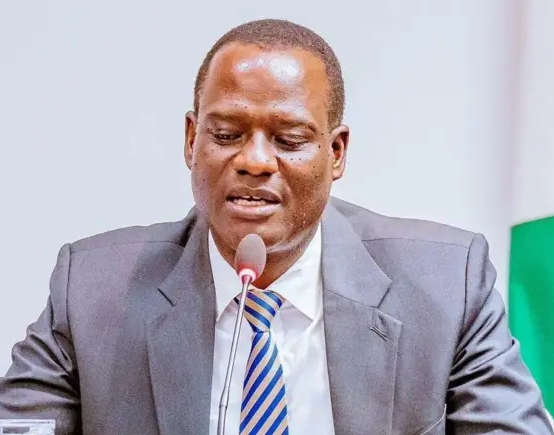
The Federal Government has denied an allegation that it has diverted a certain percentage of the federation revenue or constitutes hidden spending.
A statement issued on Sunday titled ‘False Allegation of hidden spending and diversion of federation revenue ‘ and signed by Taiwo Oyedele.
Honourable Minister of State for Finance, Federal Republic of Nigeria
Stated that the attention of the Federal Ministry of Finance has been drawn to recent media reports and commentaries that misrepresent the findings of the latest Nigeria Development Update by the World Bank, particularly claims suggesting that a significant portion of federation earnings is being “diverted” or constitutes “hidden spending.”
Oyedele said These interpretations misrepresent the World Bank’s analysis and reflect a misunderstanding of the fiscal system. and ‘MISINTERPRETATION OF FAAC DEDUCTIONS’
He said The misreporting in question incorrectly characterises Federation Account Allocation Committee (FAAC) deductions as “waste” or missing funds. This is incorrect.
And that FAAC deductions, as presented in the World Bank report, include:Statutory transfers,
Savings and investments,
Security-related expenditures,
Cost-of-collection charges,
Refunds to Ministries, Departments and Agencies (MDAs),
Transfers and interventions benefiting sub national governments.
He said It is important to emphasise that refunds and transfers to states and other tiers of government are not leakages. They represent legitimate fiscal flows, including repayments of obligations and statutorily backed allocations.SELECTIVE USE OF OUTDATED DATA
“Some commentaries selectively relied on past data while ignoring the forward-looking analysis and ongoing public financial management reforms highlighted in the report.
The World Bank explicitly notes that reforms implemented in early 2026, including the recently signed Executive Order to safeguard remittance of petroleum revenues, are already addressing concerns around deductions, and are expected to improve transparency while increasing revenues available to all tiers of government by about 0.4% of GDP annually.”
Misinterpreting one aspect of the analysis without acknowledging the progressive reforms and measures already introduced to enhance distributable federation revenues gives a distorted picture.STRONGER MACROECONOMIC FUNDAMENTALS
The broader message of the World Bank report is positive and forward-looking:
Economic growth is becoming more broad-based across sectors.
Inflation, while still elevated, is declining due to deliberate policy actions.
Nigeria’s external position has strengthened significantly, with improved reserves and a current account surplus.
Debt indicators have improved, including a decline in the debt-to-GDP ratio, the first in over a decade.”
These developments reflect the outcomes of the current administration’s ongoing macroeconomic policies and public financial management reforms.
THE REAL MESSAGE OF THE REPORT
The World Bank does not conclude that Nigeria’s fiscal system is collapsing or that reforms have failed. Rather, it states that reforms are working, and they must be sustained and deepened to translate macroeconomic gains into inclusive growth.”
The minister concluded that the Federal Government remains committed to strengthening fiscal transparency, improving revenue mobilisation, ensuring efficient public spending, and deepening reforms to support inclusive economic growth.
An accurate understanding and responsible reporting of fiscal information are critical to maintaining confidence in Nigeria’s reform trajectory and economic outlook.
‘We urge stakeholders, media organisations, and the public to engage constructively with fiscal information and avoid twisted interpretations that may undermine reform efforts and fuel public discord.”
eral Government Denies Alleged Diversion Of Federation Revenue
The Federal Government has denied an allegation that it has diverted a certain percentage of the federation revenue or constitutes hidden spending.
A statement issued on Sunday titled ‘False Allegation of hidden spending and diversion of federation revenue ‘ and signed by Taiwo Oyedele
Honourable Minister of State for Finance, Federal Republic of Nigeria
Stated that the attention of the Federal Ministry of Finance has been drawn to recent media reports and commentaries that misrepresent the findings of the latest Nigeria Development Update by the World Bank, particularly claims suggesting that a significant portion of federation earnings is being “diverted” or constitutes “hidden spending.”
Oyedele said These interpretations misrepresent the World Bank’s analysis and reflect a misunderstanding of the fiscal system. and ‘MISINTERPRETATION OF FAAC DEDUCTIONS’
He said The misreporting in question incorrectly characterises Federation Account Allocation Committee (FAAC) deductions as “waste” or missing funds. This is incorrect.
And that FAAC deductions, as presented in the World Bank report, include:Statutory transfers,
Savings and investments,
Security-related expenditures,
Cost-of-collection charges,
Refunds to Ministries, Departments and Agencies (MDAs),
Transfers and interventions benefiting sub national governments.
He said It is important to emphasise that refunds and transfers to states and other tiers of government are not leakages. They represent legitimate fiscal flows, including repayments of obligations and statutorily backed allocations.SELECTIVE USE OF OUTDATED DATA
“Some commentaries selectively relied on past data while ignoring the forward-looking analysis and ongoing public financial management reforms highlighted in the report.
The World Bank explicitly notes that reforms implemented in early 2026, including the recently signed Executive Order to safeguard remittance of petroleum revenues, are already addressing concerns around deductions, and are expected to improve transparency while increasing revenues available to all tiers of government by about 0.4% of GDP annually.”
Misinterpreting one aspect of the analysis without acknowledging the progressive reforms and measures already introduced to enhance distributable federation revenues gives a distorted picture.STRONGER MACROECONOMIC FUNDAMENTALS
The broader message of the World Bank report is positive and forward-looking:
Economic growth is becoming more broad-based across sectors.
Inflation, while still elevated, is declining due to deliberate policy actions.
Nigeria’s external position has strengthened significantly, with improved reserves and a current account surplus.
Debt indicators have improved, including a decline in the debt-to-GDP ratio, the first in over a decade.”
These developments reflect the outcomes of the current administration’s ongoing macroeconomic policies and public financial management reforms.
THE REAL MESSAGE OF THE REPORT
The World Bank does not conclude that Nigeria’s fiscal system is collapsing or that reforms have failed. Rather, it states that reforms are working, and they must be sustained and deepened to translate macroeconomic gains into inclusive growth.”
The minister concluded that the Federal Government remains committed to strengthening fiscal transparency, improving revenue mobilisation, ensuring efficient public spending, and deepening reforms to support inclusive economic growth.
An accurate understanding and responsible reporting of fiscal information are critical to maintaining confidence in Nigeria’s reform trajectory and economic outlook.
‘We urge stakeholders, media organisations, and the public to engage constructively with fiscal information and avoid twisted interpretations that may undermine reform efforts and fuel public discord.”